What are NCDs & Bonds?
NCDs (Non-Convertible Debentures) are debt instruments that companies use to raise funds. When you invest in an NCD, you lend money to the issuer for a fixed period. In return, you may receive interest at a specified rate. NCDs cannot be converted into company shares.
Bonds are also debt investments issued by governments, companies, and financial institutions to raise funds. Investors typically receive interest and the principal amount according to the terms of the bon
Types of Non-Convertible Debentures
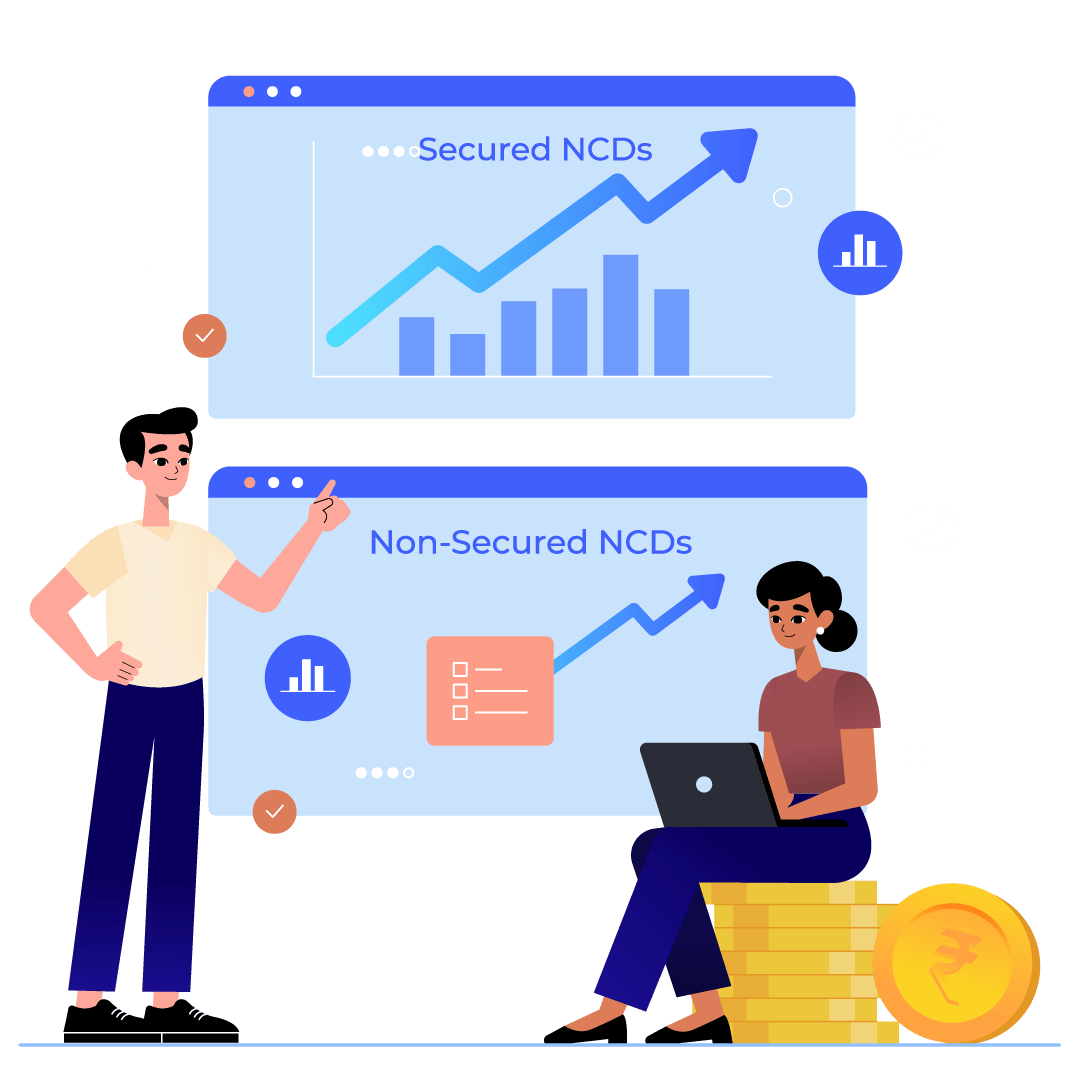
Secured and Non-secured are the two types of NCDS.
Secured NCDs: These NCDs are backed by issuer company’s assets
Non-Secured NCDs: Non-Secured NCDs are not backed by assets and are based on the creditworthiness of the issuer.

Features of Non-Convertible Debentures
- Issuance
- Tradable Securities
- Credit Rating
- Interest
- Return Rates
Why do NCDs Work for You?
- Guaranteed Return
- Higher Rate of Return
- Safety (NCDS with Higher Ratings)
- Allows Liquidity
- Exemption from TDS
Types of Bonds
- Government Bonds
- Corporate Bonds
- Municipal Bonds
- Convertible Bonds
- Zero Coupon Bonds


Features of Bonds
- Opportunity to sell
- Used as collateral
- Guaranteed by law
- More Predictable Returns
Factors to Consider Before Investing!
- Credit rating of the issuer
- Debt Level
- Capital Adequacy Ratio
- Provisions for Non-performing Assets
- Interest Coverage Ratio